Rethinking Incontinence Care in Skilled Nursing

For decades, post-acute care providers have operated under immense pressure. Between escalating regulatory oversight, razor-thin operating margins, and severe staffing shortages, introducing new technology to a clinical environment often feels daunting and impossible.
Every senior living executive and director of nursing remembers the seismic shift when the industry transitioned from manual Medication Administration Records (MARs) to electronic MARs (eMARs). It was scary, unnerving, and deeply uncomfortable. Caregivers worried about losing touch with their residents, administrators feared operational oversharing, and teams wrestled with complex tech learning curves. Yet today, no provider would ever dream of returning to paper. The initial hesitation gave way to unprecedented safety, streamlined compliance, and actionable real-time insights.
Today, skilled care stands at another critical turning point. Modern assistive technology promises to revolutionize how we manage one of skilled nursing’s most pervasive challenges: incontinence care. But technology alone is not enough.
To drive real, sustainable change, innovation cannot just be a device or a product shipped in a box. It must be a complete, supported program delivered alongside a trusted team of experienced experts.
The Innovation Trap: Why Products Alone Fail in Post Acute Care
Introducing standalone gadgets into a healthcare facility often leads to "technology fatigue" or in some cases “dashboard fatigue”. Without dedicated support, operational alignment, and clinical integration, even the most advanced tools quickly become expensive shelfware.
Product Versus Program | |
Standalone product | Comprehensive Program |
● Hardware shipping in a box with instructions | ● Expert Customer Success Teams |
● Unmanaged workflow alerts and processes | ● Workflow optimization |
● Staff friction and confusion | ● Dedicated ongoing Support |
● High risk of abandonment | ● Sustainable clinical and operational shift |
The difficulty of implementing technology in skilled nursing hasn't historically been due to a lack of good ideas; it has been a lack of change management support. Care teams do not need another software dashboard to monitor passively. They need an experienced partner who understands clinical workflows, regulatory standards, and floor dynamics to help them navigate the transition seamlessly.
The eBrief Approach: A Holistic Program, Not Just a Sensor
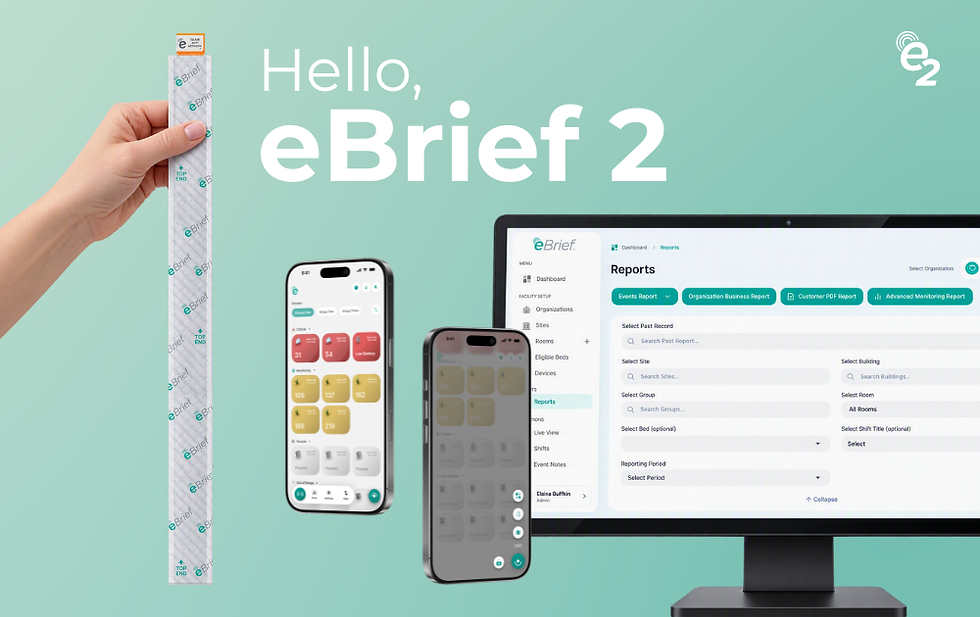
This insight is central to eBrief™. The eBrief system relies on a battery-free, disposable sensor embedded within an absorbent insert to transmit discreet, real-time wetness notifications to care dashboards.
However, the technology itself is only the beginning…
What makes eBrief truly revolutionary is its transformation of old standards in incontinence management from a manual, disruptive "check-and-change" routine into a tech-enabled, dignified care program. Instead of waking residents throughout the night to manually inspect undergarments, clinical staff receive precise alerts only when assistance is actually required.
To ensure providers succeed, the eBrief model surrounds facilities with dedicated clinical guidance, ongoing change management support, and access to continuous professional development within our eBrief community (www.eBriefCommunity.com).
Expert Insights & Industry Collaboration
Navigating clinical culture shifts in post-acute care requires learning directly from experts who understand the daily realities of operational and clinical management.
The Better Foundations Podcast
To address the intersection of quality care, workforce support, and clinical excellence, eBrief collaborates with the American Association of Post-Acute Care Nursing (AAPACN) on the podcast series Better Foundations. This series brings together clinical thought leaders to discuss pressing regulatory changes, quality measurement updates, and actionable operational strategies that empower nursing leadership.
The eBrief Community Resource Hub
Beyond podcasts, ongoing staff development requires continuous, easily accessible education. The dynamic blog and resource portal at eBriefCommunity.com provides clinicians, administrators, and C-suite executive providers with step-by-step implementation guides, clinical insights, and policy frameworks.
Whether exploring how assistive technology supports care planning, QAPI, or how data-driven care protects operational margins, the hub serves as an open learning exchange for senior living leaders.
Crossing the Bridge: From Anxiety to Unprecedented Care
Just as the move from paper MARs to eMARs redefined medication safety two decades ago, transitioning to assistive incontinence technology marks the next great advancement in post-acute care and beyond. Change will always carry initial friction, but with the right team supporting your staff, the benefits of improved skin integrity, reduced fall risks, elevated dignity, and boosted caregiver morale; it far outweighs the discomfort of trying something new.
By pairing smart technology with an expert-led program, providers no longer have to navigate the evolution of care alone.


Comments